
Ketamine-Assisted Therapy (KAT) Training
Foundations Course
Learn fundamental and practical concepts of ketamine-assisted therapy in key areas: Medical, Therapeutic, and Business.
Students will gain knowledge of this novel and unique therapy highlighting the foundations of providing interdisciplinary team-based care.
Participants who complete this course earn a Foundations Certificate. Eligible graduates can register for Advanced Courses and Practicum Certification tracks as these opportunities become available.
Participants who complete this course earn a Foundations Certificate. Eligible graduates can register for Advanced Courses and Practicum Certification tracks as these opportunities become available.
Format
Online
Duration
24 hours of Didactic Lessons
+ 6 live Q&A Calls
Teachers
19+ expert teachers
Price
$3997
Self-Paced
Learning
Expert
Instructors
Engaging
Content
Live
Sessions
Certificate Granted
Ketamine-Assisted Therapy (KAT)
Ketamine-Assisted Therapy (KAT) is redefining how we treat depression, PTSD, anxiety, and suicidality. Named one of the Top 10 Innovations in Mental Health by the World Economic Forum and Scientific American, ketamine is now trusted by patients and providers when other treatments fall short.
The New York Times calls ketamine a “transformative mental health tool.” Forbes, Harvard Health, and Yale Medicine all highlight its fast-acting, life-changing results.
Clinicians trained in KAT report feeling more effective, more aligned with their purpose, and able to reach patients in ways they couldn’t before. Demand is growing every day.
Take your place at the forefront of this movement. Build your skills, expand your practice, and help lead the future of mental health care.
The New York Times calls ketamine a “transformative mental health tool.” Forbes, Harvard Health, and Yale Medicine all highlight its fast-acting, life-changing results.
Clinicians trained in KAT report feeling more effective, more aligned with their purpose, and able to reach patients in ways they couldn’t before. Demand is growing every day.
Take your place at the forefront of this movement. Build your skills, expand your practice, and help lead the future of mental health care.







On-Demand Learning: Anytime, Anywhere
Live Classes and Interactive Sessions
Didactic Lessons
Ketamine Assisted Therapy Foundations
KAT - Foundations
General - Lesson Topics
Ethical Considerations for Working with Clients Therapeutically
This lesson introduces the four key ethical principles of autonomy, non-maleficence, beneficence, and justice, explaining their crucial role in providing ethical care within Ketamine-Assisted Therapy. You will learn to recognize and mitigate risks through comprehensive informed consent, cultural competency, and appropriate referrals, fostering a safe and responsible therapeutic environment.
Self-Care for Health Professionals
This lesson highlights the fundamental importance of self-care for health professionals, demonstrating how personal well-being directly impacts the quality and effectiveness of client care in Ketamine-Assisted Therapy. You will gain insights into practical strategies for maintaining mental and emotional stability, which is essential for providing compassionate and resilient support in complex therapeutic environments.
KAT in the Past, Present & Future
This lesson provides a comprehensive review of KAT and its historical context, tracing its therapeutic applications from its origins to its integration into modern mental health care. We explore the evolution of KAT and its growing role in contemporary treatment.
What is KAT
This lesson provides a foundational understanding of what Ketamine-Assisted Therapy (KAT) truly is, distinguishing its unique therapeutic effects and diverse treatment models. You will learn about the "Ketamine Signature" and key factors like set, setting, and the therapeutic relationship that profoundly influence the client's experience and healing journey.
Practitioner Models of delivery
Explore the three common Ketamine-Assisted Therapy (KAT) delivery models—solo practitioner, co-therapy, and group sessions—understanding their unique structures, benefits, and logistical challenges. This lesson emphasizes the critical importance of clear role definitions and effective teamwork for ensuring patient safety and optimal therapeutic outcomes, regardless of the chosen model.
Structuring A Treatment Program
This lesson introduces various frameworks and options for structuring Ketamine-Assisted Therapy (KAT) programs, including individualized and community-based models with diverse dosing strategies. You will understand the critical window of neuroplasticity post-treatment and how real-world considerations inform the design of effective, personalized care plans.
Interdisciplinary Community of Practice
This lesson explores the significance of Communities of Practice (CoPs) in personal and professional growth within psychedelic therapy, emphasizing their role in fostering embodied knowledge and relational resilience. You will learn about key qualities like shared intentions and unconditional positive regard that create safe, predictable environments, crucial for navigating uncertainty and deepening authentic connection in the field.
Safety and Liability
This lesson thoroughly identifies potential liabilities associated with each stage of the Ketamine-Assisted Therapy (KAT) process, from facility safety to in-session monitoring and post-session discharge. You will learn to implement effective preventative measures and ongoing strategies to mitigate risks, ensuring a safe, responsible, and ethically sound therapeutic environment.
Canadian Context
This lesson covers the current landscape of ketamine-assisted therapy (KAT) in Canada. We discuss applicable regulations, variations between provinces, and the current state of private and public KAT delivery. Additionally, we touch upon basic economic considerations within the Canadian context.
KAT - Foundations
Medical - Lesson Topics
What is Ketamine
Discover the historical development and pharmacological properties of ketamine, including its mechanisms of action and various routes of administration that enable its diverse therapeutic uses. This lesson details how ketamine, as a dissociative compound, uniquely promotes neuroplasticity to alleviate symptoms of depression, anxiety, and chronic pain, significantly enhancing psychotherapeutic approaches.
Intro to Efficacy Research
This lesson equips you with the critical skills to evaluate research quality in Ketamine-Assisted Therapy (KAT), helping you discern robust evidence from hype and identify areas needing further investigation. You will gain an understanding of how well-researched ketamine is for therapeutic use in mental health, empowering you to apply findings responsibly in clinical practice.
Lifestyle Medicine in KAT
This lesson demonstrates how integrating Ketamine-Assisted Therapy (KAT) with lifestyle medicine creates a comprehensive approach to sustained mental and physical well-being. You will learn how factors like nutrition, sleep, stress management, and social connections synergistically support the neuroplastic changes initiated by ketamine, promoting lasting recovery and resilience.
Medical Intake & Informed Consent
This lesson provides foundational knowledge on the critical medical intake and informed consent processes for Ketamine-Assisted Therapy (KAT), emphasizing patient screening, risk evaluation, and ethical care planning. You will learn to identify common medical and psychiatric contraindications and cautions, ensuring safe, appropriate, and individualized treatment delivery.
Basic Dosing and Route Strategy
This lesson offers a comprehensive review of ketamine administration routes and their pharmacokinetic profiles, detailing how absorption, bioavailability, and duration influence the client experience. You will explore diverse dosing strategies—including psychedelic, psychodynamic, psycholytic, and relational approaches—to tailor treatment effectively for specific therapeutic objectives and patient outcomes.
Side Effects
This lesson offers a comprehensive overview of common and rare side effects of ketamine, clearly distinguishing them from expected therapeutic effects and outlining effective management strategies. You will gain insights into why ketamine is considered an extraordinarily safe drug when administered in therapeutic settings, with most side effects being minimal, self-limited, and transient.
Office & Staff Emergency Preparation
This lesson outlines essential strategies for comprehensive office and staff emergency preparedness in a Ketamine-Assisted Therapy (KAT) clinic, covering legal mandates, operational capacity, and staff training in life-saving skills like BLS and ACLS. You will learn to design clear communication protocols and adaptable emergency procedures, ensuring seamless and safe operations, particularly for vulnerable patients.
Medical Emergencies and Response
This lesson provides critical, actionable protocols for identifying and responding to medical emergencies during Ketamine-Assisted Therapy (KAT), focusing on immediate life-saving measures and effective management strategies. You will understand specific team roles and responsibilities (Medical Lead, Communications Lead, Support) and the importance of proactive drills and pre-printed orders for optimal emergency preparedness.
KAT - Foundations
Therapeutic - Lesson Topics
Psychotherapy in KAT
This lesson examines the powerful synergy between psychotherapy and ketamine-assisted treatment, showcasing how diverse therapeutic approaches enhance ketamine's unique effects like cognitive flexibility and profound insight. You will identify the specialized skills and competencies essential for therapists guiding clients through the distinct phases of KAT, including navigating non-verbal states and applying integration techniques.
Therapeutic Intake & Informed Consent
This lesson differentiates therapeutic from medical informed consent in Ketamine-Assisted Therapy (KAT), highlighting therapeutic consent as an essential, ongoing, and adaptive process that evolves with the client's journey. You will learn to distinguish between client eligibility and suitability while understanding the critical role of a multidisciplinary team in comprehensive screening and care planning.
Therapeutic Preparation
This lesson outlines the core principles of therapeutic preparation for Ketamine-Assisted Therapy (KAT), including establishing relational safety, assessing client readiness, and setting intentions for the experience. You will learn how this individualized and ethical process profoundly impacts treatment outcomes by preparing clients psychologically, emotionally, and physically for their ketamine journey.
In-Session Process
This lesson guides you through the essential components of a successful Ketamine-Assisted Therapy (KAT) session, emphasizing the creation of a safe and supportive therapeutic environment and the critical role of practitioner presence. You will learn to apply effective verbal guidance techniques and understand the significance of a designated recovery space for client re-orientation and initial integration.
Integration
This lesson delves into integration as the most crucial phase of Ketamine-Assisted Therapy (KAT), explaining how it translates profound insights into lasting healing, personal growth, and transformation. You will explore common challenges and opportunities within this client-led, ongoing process, learning practical strategies to support sustained progress and well-being.
Holistic Perspectives on KAT
This lesson identifies the key roles in providing KAT and explores different delivery models, each with its unique challenges and benefits. We'll examine models ranging from psychiatrist-only approaches to collaborative, multidisciplinary team structures. Additionally, we'll explore the concept of holistic health and identify components of health and wellness that can be addressed concurrently within a comprehensive KAT approach.
KAT - Foundations
Business - Lesson Topics
Basics of Facility Management and Considerations
This lesson covers the basics of facility management and important considerations for establishing a KAT practice. We'll discuss factors in choosing a suitable location, insurance requirements, and the proper management of controlled substances, including the roles of management and staff. Additionally, we'll cover program design considerations, including staffing roles, and other facility considerations such as safe access, lighting, soundproofing, and appropriate bathroom setup.
Interdisciplinary Care Considerations
This lesson explores the importance of interdisciplinary collaboration in providing effective KAT. We'll discuss the benefits of a team-based approach, including improved patient outcomes and safety. Topics will include the roles of different professionals involved in KAT, effective communication strategies, and potential challenges in interdisciplinary care.
Prerequisites for Enrollment
Full Learning Pathway
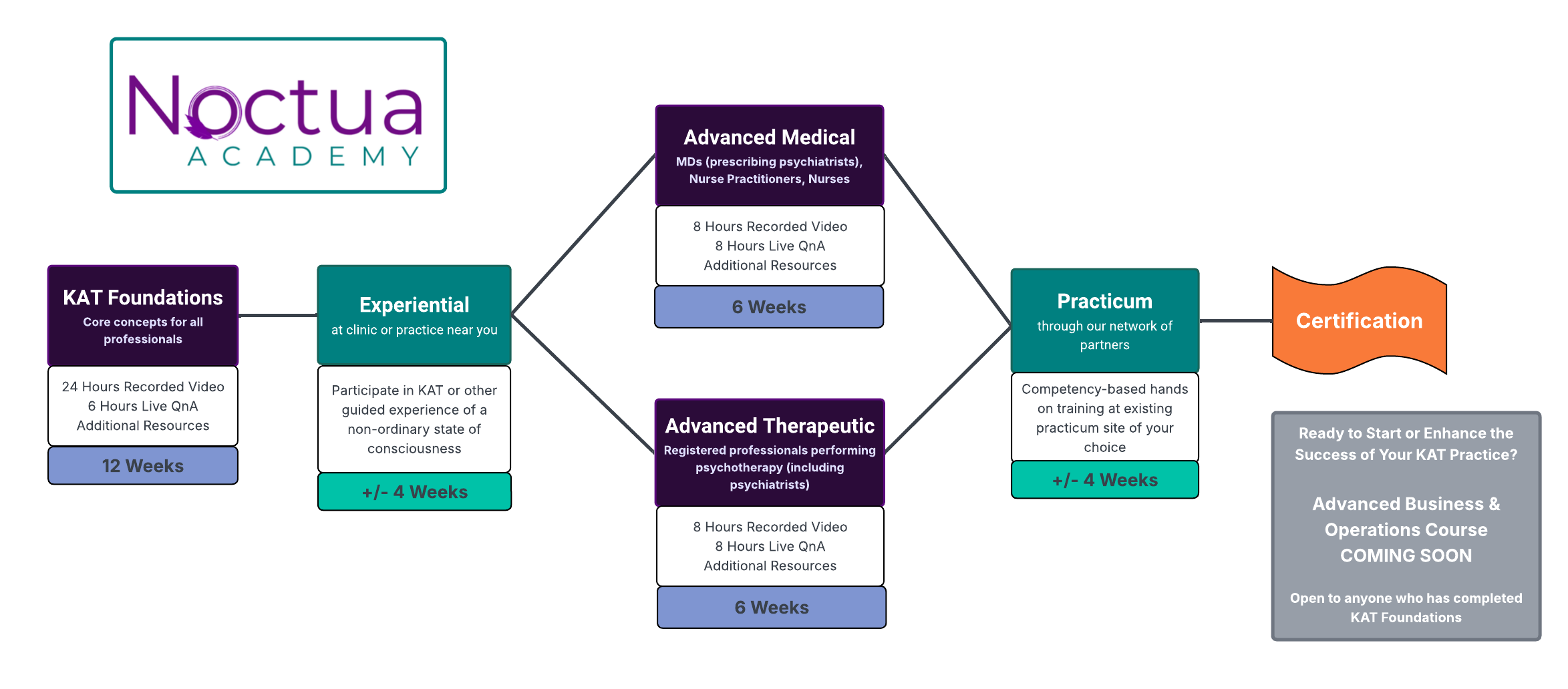
Featuring a number of leading experts
Meet Your Instructors
Angela Ward, BSN RN, HWNC-BC
Dr. Crystal Dawn Silas, MD
Dr. Ian Mitchell, MD, FRCP
Jagpaul Deol, RPh
Dr. Steve Rosonke, MD
Todd Haspect, RCC
Trina Woods, RSW
Veronika Gold, MFC
Zach Walsh, PhD
Dr. Stephanie Michael Stewart, MD
Dr. Sandra Dreisbach, PhD
Madison Nobbs, RN
Dr. Rae St. Arnault, ND
Sabrina Syne, RN, CPA
Shannon Dames, RN, MPH, EdD
Dr. Rick Miners, R.Psych
Kate Browning Registered Nurse (ret.) PhD Candidate
Keren Mitchell, NP, RCC
Dr. Phil Wolfson, MD
FAQ
Are your courses regularly updated?
Yes, our courses are continuously updated to reflect the latest advancements and best practices in healthcare. We ensure our content remains relevant and effective for our students.
Do I get a certificate for completing your online courses?
Absolutely. Upon completing all course units and passing the final exams, you will receive a certificate of completion, which can be used to demonstrate your expertise and commitment to continuous learning.
What if I have more questions?
We are here to help! Please send your queries to Support@noctualearningacademy.com, and our support team will respond promptly to assist you.
